
What homeowners often miss
A gutter can look clean—and still send water toward the home.
Leaves are easy to see. The less obvious performance factors are pitch, outlet location, seam condition, attachment, capacity, and where each downspout finally releases the water.
Good gutter design is a complete route for water—not simply a clean channel at the roof edge.
Clear does not always mean correctly draining
A gutter needs enough fall to move runoff toward an outlet without holding water. Misaligned sections, low spots, loose hangers, or a poorly placed outlet can slow the flow even when the channel is free of debris. The useful question is not only whether the gutter is open, but where the water goes during a real rain event.
Some roof areas concentrate the load
Valleys and large roof planes can direct a concentrated stream into a short section of gutter. If the layout does not account for that path, water may overshoot, spill behind the gutter, or repeatedly wet the fascia. Staining, peeling finishes, eroded soil, and splash patterns can help reveal the route.
The downspout is only half the answer
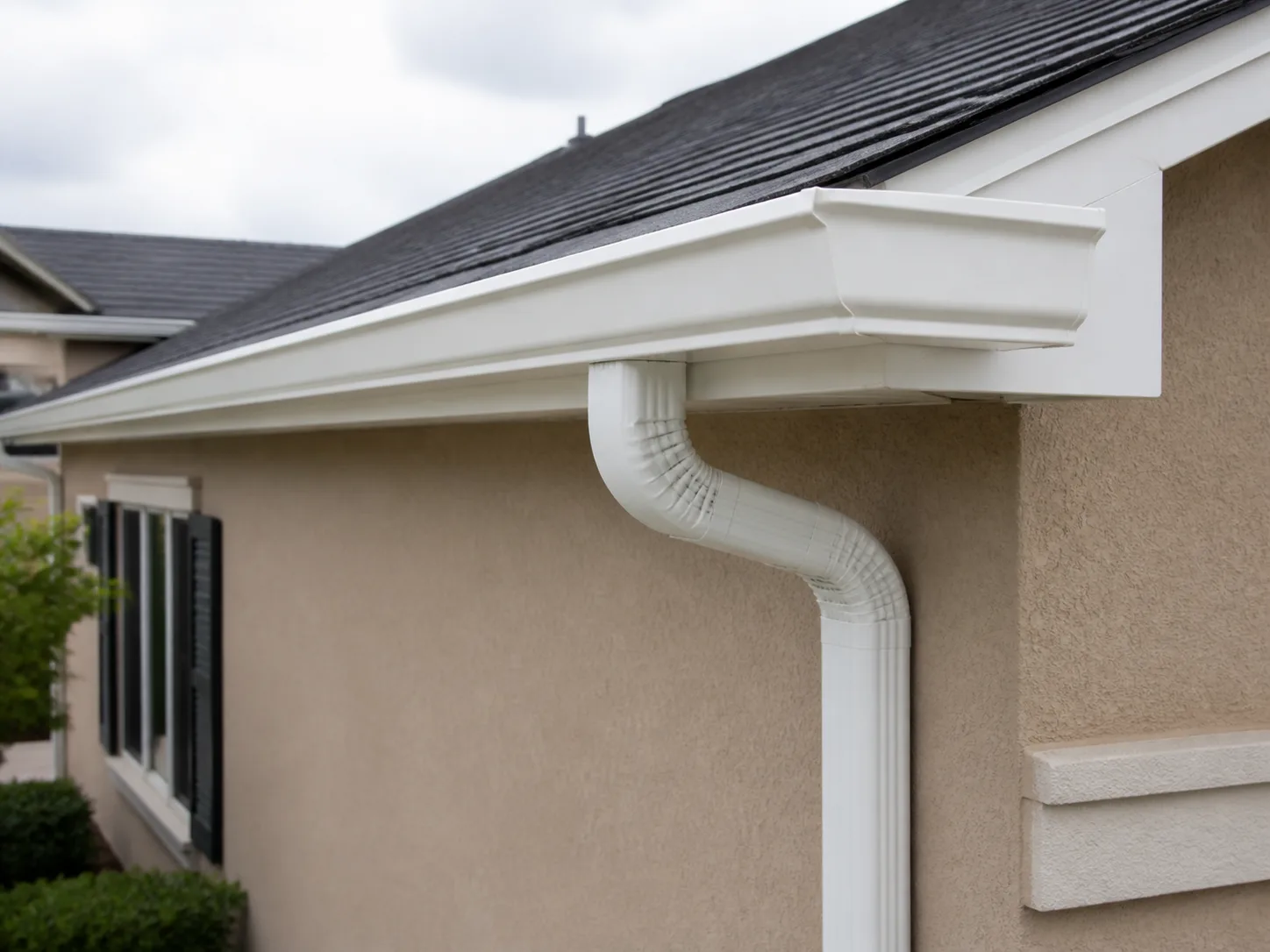
Moving water off the roof is not enough if it is released beside the structure or onto an area that sends it back. A drainage review follows the path from the roof edge through the outlet and downspout to a sensible discharge point for the property.
What the inspection considers
- Gutter pitch and standing-water clues
- Seams, hangers, and fascia attachment
- Roof valleys and concentrated runoff
- Outlet and downspout placement
- Discharge direction and erosion clues
Technical references: U.S. EPA: Moisture Control Guidance